
A patch of dry grass behind a house does nothing but wait to be mowed. A small body of water in the same footprint changes the entire way people leave through the back door. That difference – between ground you ignore and ground you use every day – is the whole argument for putting a plunge pool where a forgotten corner used to sit.
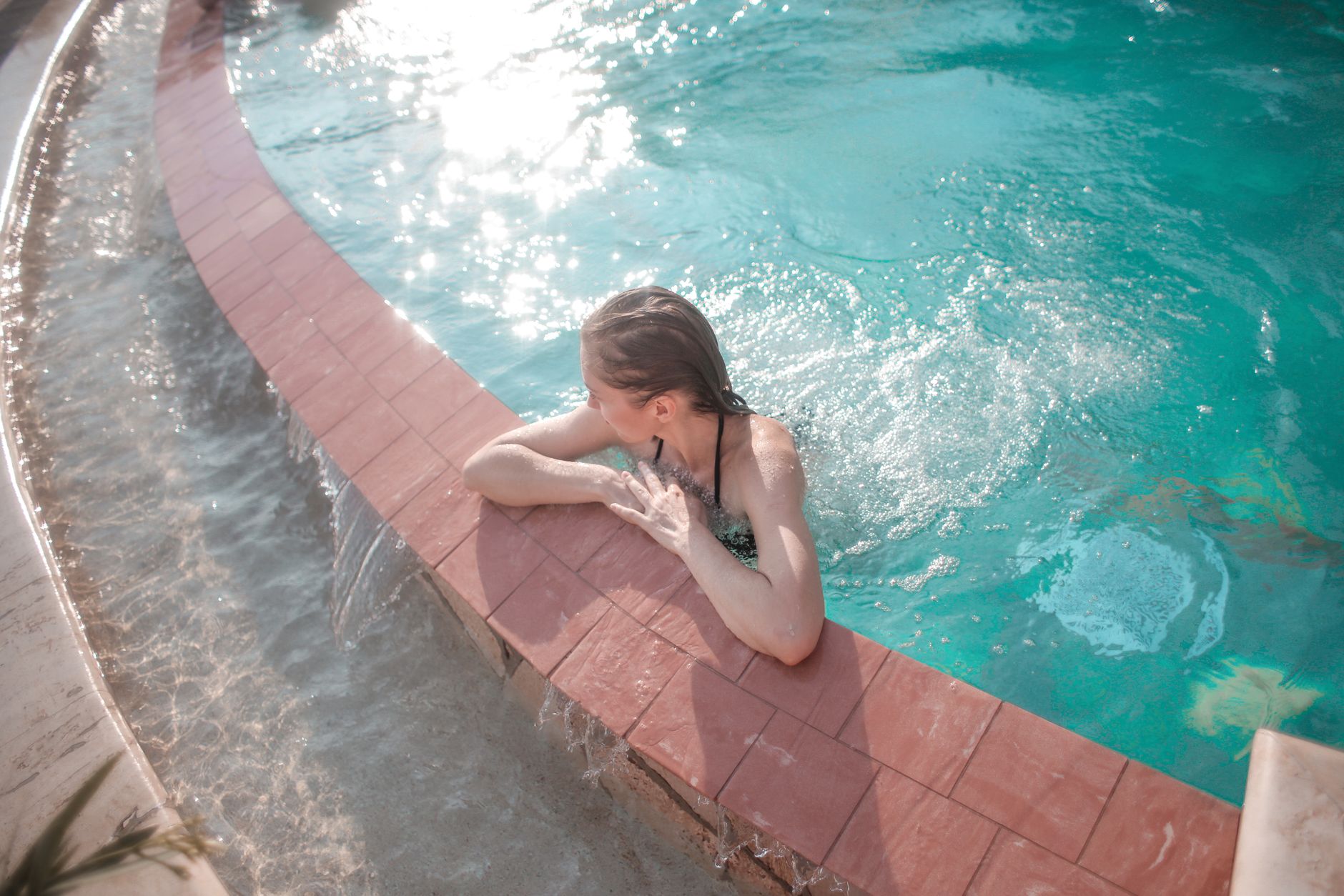
Bare Lawn vs. Living Retreat
Most neglected yards share the same story: a rectangle of turf that gets walked past but never onto. It exists as a buffer, not a destination. Once a plunge pool drops into that space, the visual center of the property shifts outward. Reflected light replaces flat green, and the surrounding paving, planting, and seating start to arrange themselves around the water rather than around nothing. What was a spot to glance at becomes a place to sit in.
Wasted Corner vs. Usable Square Footage
The classic candidate for transformation is the awkward corner – too shaded for a garden, too narrow for a table, too visible to leave cluttered. Because a plunge pool has a compact footprint, it fits where a full-length pool never could. A stretch of ground that measured out at maybe four by six meters can absorb the pool, a slim deck, and a bench without feeling crowded. The property doesn’t get bigger, but the share of it that people actually occupy grows considerably.
Summer Boredom vs. Daily Cool-Down Ritual
Before, hot afternoons meant staying indoors with the blinds down. After, there’s a reason to step outside even for ten minutes. A plunge pool is shallow and cool rather than a swimming lap, so the pattern of use is short and frequent: a dip before dinner, a soak after a warm commute, kids in and out while an adult reads nearby. Households in places like Newcastle that once treated the yard as a summer afterthought find themselves building small habits around the water instead. If you are weighing sizes and shapes, more information is available at https://poolbuildersnewcastle.com/plunge-pool/, which is worth a look before committing to a design.
High-Maintenance Yard vs. Low-Effort Upkeep
People assume adding water adds work. Often it removes it. The lawn that demanded mowing, edging, watering, and reseeding disappears under paving and pool. A compact volume of water is quicker to balance chemically than a large pool, and a cover keeps debris out between uses. The trade is real but usually favorable: less time pushing a mower, a little time skimming and testing. For a yard that was previously a chore with no payoff, that is a clear improvement.
Flat Resale Appeal vs. Buyer-Ready Property
An empty backyard photographs as a blank. Buyers walking through mentally file it under “potential” – meaning work someone else has to do. A finished plunge pool reads as a completed feature, something to enjoy on day one rather than a project. It signals that the outdoor space has been thought through, which tends to lift the emotional response to the whole house. That shift from indifferent to interested is often what separates a listing that lingers from one that moves.
Old Habits vs. New Outdoor Routines
The deepest change is behavioral. Families who used to gravitate to the couch after work start gathering by the water. Weekend mornings drift outside. Guests end up around the pool instead of crowded in the kitchen. None of this was possible when the yard offered nothing to do. The pool doesn’t just add a feature; it rewrites where the household spends its downtime.
If you are staring at a stretch of ground that earns its keep only as a place to store the trampoline nobody uses, the calculation is straightforward:
- Small footprints suit awkward and unused corners best.
- Upkeep is modest once a cover and a routine are in place.
- Daily use, not occasional swims, is the real return.
- A finished feature reads far better to future buyers than bare grass.